Tim’s view
The war in Iran will force governments and companies to rethink the necessary conditions for energy security.
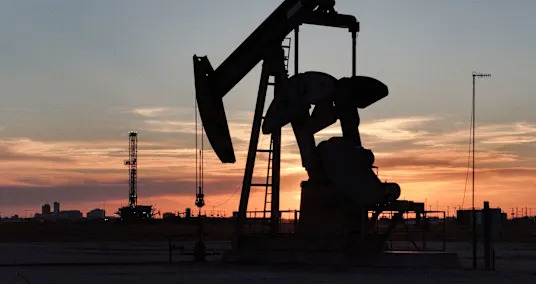
The prevailing sentiment at CERAWeek has been that financial markets have not yet come to terms with how long lasting the oil and gas market disruption from the war is likely to be; higher prices will very likely loom even if the US military quickly prevails. No matter what happens next, the war underscores the volatility inherent to the global fossil fuel trade at a time when alternative technologies are proliferating.
Sure, renewables are exposed to upfront, capex-related risk. And yes, China effectively controls the market for wind, solar, and battery hardware, and for the minerals they require. But once they’re installed, these technologies are largely insulated from geopolitical events, as Pakistan has proved in recent weeks by leaning on solar while neighboring Bangladesh suffers from skyrocketing gas prices. “The fact that the wind and sun are free and domestic and inexhaustible doesn’t get nearly as much play as it deserves,” David Crane, a former senior US energy official who is now CEO of the investment firm Generate Capital, told me this week. Put another way, the sun — unlike, say, a strait — can’t be shut down by one’s adversaries.
Fossil fuels, conversely, are permanently exposed to ongoing opex risk. Even the US, the world’s top producer, can’t completely insulate itself from price spikes. But the fact is that every country will need a mix of all technologies for the foreseeable future to maintain access to reliable, affordable energy.
After the energy crisis of the 1970s, many countries leaned diversified international trade and coordination as the solution, hoping that increasing the number of sources of supply would diminish any one actor’s ability to throttle the market. That mostly worked for 50 years. The legacy of this war will be a shift by countries to lean trade as much as they can, Meghan O’Sullivan, a former National Security Council official and energy geopolitics expert at Harvard, told me: “The lesson many will take away from this is that being exposed to global shocks is something they need to avoid.”
Notable
The replacement for the liberal international order “won’t be negotiated in Geneva or adjudicated in The Hague,” writes Foreign Policy, “It will be determined by who controls the energy flows, mineral deposits, and technological systems on which all modern life now depends.”
LATEST POSTS
- 1
 ‘Serving is not just a place’: Bayside Church Granite Bay reimagines annual mission amid conflict in Mexico
 - 2These HGTV stars made a pledge to keep their kids off smartphones. Here's how it's going.
- 3From record warming to rusting rivers, 2025 Arctic Report Card shows a region transforming faster than expected
- 4At least 490 protesters killed in Iran, activists say
- 5Choosing Moving Styles for Your Restroom Redesign


- Modern surgery began with saws and iron hands – how amputation transformed the body in the Renaissance
- A Gustav Klimt painting is now the most expensive piece of modern art sold at auction. The fascinating history behind the $236 million 'Portrait of Elisabeth Lederer.'
- UK to hold fresh pork, other affected Spanish products at border amid African swine fever outbreak
- Internet goes (cocoa) nuts: The funniest reactions to 12 tonne theft of KitKat bars
- Baikonur launch pad damaged after Russian Soyuz launch to International Space Station
- 3 back-to-back storms forecast to bring snow and surges of cold air across the Midwest to the Northeast
- Is relief in sight? Flu season still brutal but cases are declining.
- James Webb Space Telescope spies mysterious high-energy radiation in star nursery
- Arctic sea ice hits lowest winter level as heat records are shattered worldwide