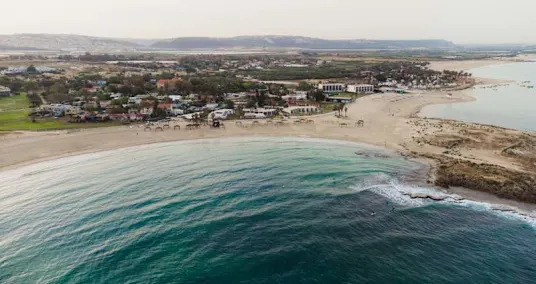
The discovery was made in an ancient shipwreck in the Dor Lagoon near the Carmel Coast, where archaeologists recovered nine pieces of unprocessed iron known as “blooms.”
Researchers from the University of Haifa said Wednesday that an underwater excavation off Israel’s northern Mediterranean coast uncovered what they described as the earliest known cargo of raw iron transported by ship, dating back around 2,600 years, Xinhua reported.
The discovery was made in an ancient shipwreck in the Dor Lagoon near the Carmel Coast, where archaeologists recovered nine pieces of unprocessed iron known as “blooms.” According to the university, the find provides direct evidence of how iron was transported in its earliest commercial stages.
The material was preserved in its original form, having solidified directly in a smelting furnace without undergoing forging or further refinement. Researchers said this distinguishes the cargo from later iron artifacts that typically show signs of shaping or tool-making.
Unlike copper and bronze, which could be melted into liquid form in ancient production processes, iron was heated with charcoal to produce a solid, porous mass. That mass was generally hammered to remove impurities and create denser material suitable for tools and implements.
The recovered blooms showed no indication of that secondary processing stage, suggesting they were transported immediately after production.

Earliest iron shipment discovered in ancient Mediterranean wreck
To determine the age and condition of the cargo, researchers conducted microscopic and chemical analyses.
Radiocarbon dating was also carried out on charred wood embedded in one of the pieces, helping confirm the timeline of the shipment. The findings were published in the journal Heritage Science.
Researchers said the cargo indicates that iron was being moved in raw form from production sites to other locations for further processing, pointing to a level of specialization in ancient manufacturing and trade networks in the Mediterranean.
The University of Haifa said the discovery provides new insight into early iron production and distribution practices in the region.
LATEST POSTS
- 1
 Anti-war protests held across Israel under wartime gathering limits
 - 2Flourishing in a Remote Workplace: Individual Techniques
- 3China bans storing cremated remains in empty 'bone ash apartments'
- 4My skin feels drier, my lips thinner and my makeup heavier. How do I adjust my routine for aging skin?
- 5China's Normal Ponders: A Visual Excursion





- Katz to Hezbollah chief Qassem: You won't live to see Israel’s full response to Passover attacks
- Italian court approves extradition to Germany of Ukrainian suspect in Nord Stream pipeline blast
- Instructions to Comprehend and Use Open Record Extra Offers
- Taylor Frankie Paul's domestic violence case is fueling discussions about DARVO. Experts say terms like this shouldn't be used lightly.
- France's Senate backs ban on social media platforms for under-15s
- Blue Origin launches huge rocket carrying twin NASA spacecraft to Mars
- Palestinians reel under winter rains as Israel blocks Gaza shelter supplies
- The Specialty of Cleaning up: Change Your Space and Brain
- UK, Canada, Germany, others condemn Israel's West Bank settlement plan